
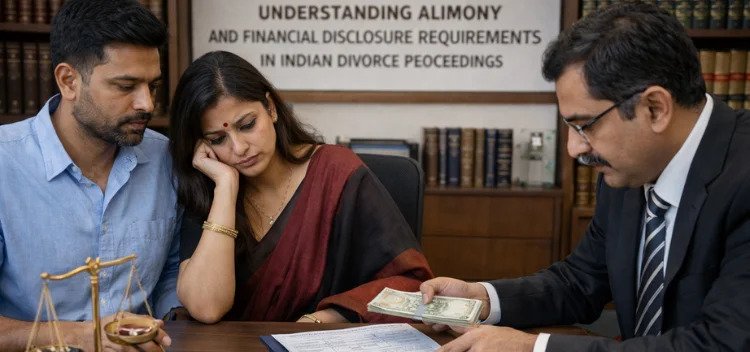
Divorce is a significant legal decision that can involve emotional concerns as well as complex issues relating to property, maintenance, child custody and financial responsibilities. Understanding the applicable law and the correct legal procedure is important before initiating or responding to divorce proceedings.
For individuals dealing with matrimonial disputes in Delhi the choice of legal representation can become particularly important when the matter involves proceedings connected with the Supreme Court of India. A Divorce matter may involve several stages depending on whether both spouses agree to end the marriage or one spouse contests the divorce.
This guide explains the basic legal framework for divorce in India including mutual consent divorce, contested divorce, common grounds for divorce, important considerations and the role of a divorce lawyer in Supreme Court Delhi matters.
What Is Divorce Under Indian Law?
Divorce is the legal dissolution of a marriage through a competent court. The applicable law depends on factors such as the religion of the parties and the law under which the marriage was solemnised.
For marriages governed by the Hindu Marriage Act, 1955 the law provides specific grounds on which a spouse may seek dissolution of marriage. Section 13 includes grounds such as cruelty, desertion and certain other legally recognised circumstances.
The procedure can differ considerably depending on whether the spouses mutually agree to separate or whether one spouse files a contested petition.
Because matrimonial disputes can involve several connected legal issues it is important to understand the circumstances of the particular marriage before deciding which legal route may apply.
Mutual Consent Divorce
A mutual consent divorce is generally considered where both spouses agree that the marriage should be dissolved and are able to reach an understanding regarding relevant issues.
Under Section 13B of the Hindu Marriage Act a divorce by mutual consent involves a joint petition by the spouses subject to the statutory requirements. The law also provides for a second motion after the prescribed period.
The Supreme Court has clarified that the six-month period contemplated under Section 13B(2) is not an absolute mandatory requirement in every case. The Court has recognised that the waiting period can be waived by the court in appropriate circumstances when the statutory conditions and facts of the case justify such relief.
This does not mean that every mutual consent divorce can automatically be completed without the waiting period. Whether waiver is appropriate depends on the circumstances and judicial discretion.
Recent Supreme Court orders also demonstrate that parties in appropriate cases may obtain divorce by mutual consent where the requirements of the law and the circumstances of the matter support such relief.
Contested Divorce
A contested divorce arises when the spouses do not mutually agree to dissolve the marriage or when there is a dispute regarding the grounds or other issues connected with the proceedings.
Under Section 13 of the Hindu Marriage Act a spouse may seek divorce on legally recognised grounds. These include cruelty and desertion among other statutory grounds. Desertion under the Act generally requires the statutory period specified by law to be satisfied.
In a contested divorce the court may consider pleadings, documents, evidence and the submissions of both parties before deciding the dispute.
The process can become more complicated where the case also involves allegations of domestic abuse, financial disputes, child custody, maintenance or property-related issues.
Common Grounds for Divorce
The exact grounds available depend on the applicable personal law and facts of the marriage. Under the Hindu Marriage Act some recognised grounds include:
1. Cruelty
Cruelty is one of the statutory grounds for divorce. The circumstances and evidence relevant to cruelty depend on the facts of each case.
2. Desertion
Desertion can be a ground for divorce where the statutory requirements are satisfied. Section 13 of the Hindu Marriage Act refers to desertion for a continuous period of not less than two years immediately before presentation of the petition.
3. Conversion
The Hindu Marriage Act also recognises conversion to another religion as one of the statutory grounds in specified circumstances.
4. Certain Mental Disorders
The Act contains specific provisions concerning mental disorder as a ground for divorce. Such provisions must be applied according to the statutory requirements and facts established before the court.
5. Other Statutory Grounds
The law contains additional grounds relating to circumstances such as renunciation of the world and certain circumstances where a spouse has not been heard of for the prescribed period.
The availability and applicability of a particular ground should always be assessed according to the law governing the marriage and the evidence available in the individual case.
What Issues Can Arise Along With Divorce?
Divorce proceedings do not always concern the dissolution of marriage alone. Several related legal issues may need to be addressed.
Child Custody
Where children are involved the court may need to consider custody and related arrangements. The welfare and interests of the child are important considerations in such proceedings.
Maintenance and Financial Support
Financial support can become an important issue during or after matrimonial proceedings. Depending on the circumstances parties may seek appropriate relief under applicable matrimonial and other laws.
Property and Financial Arrangements
Spouses may also have disputes involving jointly held property, financial obligations or other assets. These matters should be examined separately according to the relevant legal provisions and ownership documents.
Settlement of Disputes
Some matrimonial disputes may be capable of settlement through negotiation or mediation. The Supreme Court has dealt with matrimonial matters where disputes were referred to mediation and settlements were subsequently placed before the Court.
Mediation can provide parties with an opportunity to discuss settlement terms with the assistance of a neutral mediator. However the suitability of mediation depends on the circumstances of each matter.
Role of a Divorce Lawyer in Supreme Court Delhi Matters
Legal representation can be particularly important when matrimonial litigation involves complex procedural or constitutional issues or reaches the Supreme Court.
A divorce lawyer can assist with understanding the applicable law, preparing legal documents, evaluating the available evidence and presenting the client’s position before the appropriate court.
In matters connected with the Supreme Court a lawyer may also need to consider the procedural requirements applicable to proceedings before the Supreme Court.
The Supreme Court itself categorises family law matters into areas including mutual consent divorce matters, other divorce matters, child custody matters and matters under the Hindu Marriage Act.
This highlights that matrimonial litigation can involve different types of proceedings and that the appropriate legal strategy depends on the nature of the dispute.
Documents Commonly Relevant to Divorce Proceedings
The documents required can vary depending on the nature of the case. Commonly relevant documents may include:
- Marriage certificate or other proof of marriage
- Identity and address documents
- Photographs relating to the marriage
- Details of children if applicable
- Financial records where maintenance or financial issues are involved
- Relevant communication or other evidence
- Previous court orders
- Settlement agreements where applicable
- Documents relating to jointly held assets where relevant
A lawyer can identify the documents specifically required after reviewing the circumstances of the case.
How to Approach a Divorce Matter in Delhi
Before starting divorce proceedings it is useful to clearly understand the objective and the available legal options.
First determine whether the matter is likely to be mutually settled or contested. If both spouses agree on divorce then the terms relating to financial issues and other relevant matters should be carefully considered before filing.
If the matter is contested then the legal grounds and supporting evidence should be assessed before initiating proceedings.
It is also important not to rely on general information alone. Divorce law can depend on the personal law applicable to the parties as well as the specific facts and procedural history of the matter.
For individuals seeking legal assistance around the Supreme Court, Delhi a consultation with an experienced matrimonial lawyer can help clarify the appropriate legal route.
Why Legal Guidance Matters in Divorce Cases
A divorce proceeding can have consequences beyond obtaining a decree of dissolution. Decisions made during litigation may affect financial claims, custody arrangements and future legal rights.
Errors in pleadings or failure to address important issues at the appropriate stage can create additional complications. Professional legal guidance can help ensure that the case is approached according to the applicable law and court procedure.
The objective should be to understand the legal position clearly and make informed decisions based on the facts of the individual matter.
Conclusion
Divorce is a legally significant process that requires careful consideration of the applicable law, evidence and procedural requirements. Whether the matter involves mutual consent divorce or a contested divorce the correct legal approach depends on the circumstances of the marriage.
For matters involving the Supreme Court, Delhi it is particularly important to understand the nature of the proceeding and the procedural requirements applicable to the case. Issues such as child custody, maintenance and financial arrangements may also need separate consideration.
If you are considering Divorce in Delhi or are involved in an ongoing matrimonial dispute seeking professional legal guidance can help you understand your rights, available remedies and the appropriate legal process.
Frequently Asked Questions About Divorce
1. What is the difference between mutual consent and contested divorce?
In mutual consent divorce both spouses agree to dissolve the marriage subject to the requirements of the applicable law. In a contested divorce one spouse seeks dissolution while the other spouse does not agree or disputes the legal grounds or related issues.
2. How long does a divorce take in India?
There is no single timeline applicable to every divorce case. The duration depends on factors such as whether the divorce is by mutual consent or contested, the court involved, the issues in dispute and the procedural history of the matter.
3. Can the six-month waiting period for mutual consent divorce be waived?
The Supreme Court has held that the six-month period under Section 13B(2) of the Hindu Marriage Act is directory rather than mandatory in the sense explained by the Court. A court may waive the period in appropriate circumstances after considering the facts and applicable requirements.
4. Is desertion a ground for divorce?
Yes. Under Section 13 of the Hindu Marriage Act desertion is a statutory ground for divorce when the requirements specified by law are satisfied. The Act refers to continuous desertion for not less than two years immediately before presentation of the petition.
5. Can matrimonial disputes be settled through mediation?
Yes. Matrimonial disputes can in appropriate cases be referred to mediation. Supreme Court records show matrimonial matters being referred to mediation where parties sought an amicable resolution.
6. Do I need a divorce lawyer for a Supreme Court matter?
Legal representation can be important in Supreme Court proceedings because the applicable procedure and legal requirements can be complex. The need for particular representation depends on the nature and stage of the case.
7. Can divorce proceedings also involve child custody and maintenance?
Yes. Divorce proceedings may involve related matrimonial issues such as child custody and financial support. The applicable remedies and legal requirements depend on the circumstances of the parties and the law governing the matter.
8. Which law applies to my divorce?
The applicable law depends on factors including the religion of the parties, the law under which the marriage was solemnised and the facts of the case. A legal consultation can help determine the applicable statutory framework.
9. Can a divorce case reach the Supreme Court of India?
Yes. Certain matrimonial disputes can reach the Supreme Court through the appropriate legal proceedings. The Supreme Court maintains specific categories for mutual consent divorce matters and other divorce matters.
10. What should I do before filing for divorce?
Before filing you should understand the applicable legal grounds, collect relevant documents and evidence and consider issues such as maintenance, child custody and settlement. Obtaining legal advice before filing can help you understand the available options and procedural requirements.